Following guidelines for Jury process

Hi guys, this post is for people who don’t know how to follow the guidelines of societies or exhibitions who stipulate certain requirements in their application procedures because sometimes computers can scare people. I’ve tried to break down some guidlines into simple, easy to learn steps.

Number one, if a society or exhibition asks you to name your images a certain way, they have a reason for doing so. Please follow those guidelines to the letter and things will go smoothly. In the case of the International Society of Scratchboard Artists, if I were to apply for active membership status I would notice that the requirements call for my zebra piece to be titled the following way

HedgesPatrick-LifebloodofEtosha-16×20.jpg

The reason for this is so that we never mix up an image from one applicant with another. We need the name, title and size so the jury can do its job. Any organisation can (and often will) dismiss an application with no refund if the guidelines are not followed.

Tip. Read the guidelines carefully, no matter which society or exhibition you are applying to.

Number Two

Not everyone knows how to resize an image. I have shown guidelines below to follow for resizing images in three different programs that you might have or are able to install on your computer for free, and following those three Cathy Sheeter has written one for Photoshop.

Note, this tutorial was written in November 2011. Programs change over time and elements may change but generally these instructions will allow you to work your way through newer programs or updates.

—————————————

Firstly, Picture Manager. This program comes bundled with Microsoft Office so most people have it. If you don’t have “Office”, go to my next program.

Open your picture in Picture Manager. If Windows doesn’t do this automatically (by ‘default’), locate your image in Windows Explorer, hover your mouse over the image and do a right click. A dialog box will open and you can go to “Open With” and then click “Microsoft Office Picture Manager”.

You will now see something like this so click on “Edit Pictures” and then go to the right and click on “Resize”.

Put a dot in “Percentage of original width:height” and reduce this until it is about 1000 pixels on the longest side. You will see the pixels changing where it says “New size”.

Click “OK”.

Now, very important for your own sake, save your image by going to “File” and “Save As”. Call it by the name you need to in the guidelines. Then click “Save”

Now you will want to close your image. Click the “X” at the top right and you will be asked again if you want to save your image – DO NOT SAVE IT. This is your orginal image at the original larger size, and you will want to keep that for your own records. If you click “Save” at this point, you will lose your original file and that is not something you want to do. (I know this by bitter experience).

—————————————

I have also installed “Gimp” on my computer. This is a free image manipulation program a bit like Photoshop. Get it, it’s free and very powerful (unless you have Photoshop). You can get it from here

So, open up Gimp and it will look like this (igonore my zebras in the first picture, they are just on my desktop )

Click “File” and then “Open” and navigate to the image you want.

Go to “Image” and then “Scale Image”

Type 1000 into the longest side (if yours is a landscape like my zebras, do it in “width”). Don’t bother with the other side as Gimp will do that for you. Then click “Scale”

Then go to “File” and “Save As” and save it as the name you need to call it. Make certain it says .jpg after the file name.

You will be able to exit this directly as Gimp keeps your original image.

If you need to save your image below a certain amount of kilobytes, when you do a “save as” with a jpg image, it should give you the option to change the ‘quality’ setting in percentage. By lowering that number it will reduce your file size. Experiment and you will get your image below the required size while still keeping the pixels correct as in the previous steps. To find out how many kilobytes your image is, hover your mouse over your image in Windows Explorer and a dialog box will come up and tell you the size. You could also ‘right click’ and go to ‘properties’.

—————————————

Finally, I also have a program called Light Image Resizer 4 which allows you to save multiple images at once to a predetermined size, very useful. It’s free and you can get it here

Open it and it will look like this

Click “continue” unless you want to buy their pro version.

Navigate to your image and open it.

Like I said, you could re-size quite a few images at once if they are all in the same folder.

Where it says “width” and “height”, type in 1000 in both boxes. This will keep the longest side to 1000 pixels and the other will reduce accordingly. Make certain it says “Create Copies” next to ‘action’. This will keep your original files. Click “Process” and “Save”

Close your program

Important!! Go to your image in something like Windows Explorer or whatever you use to navigate to your pictures. You will notice your original is still there but you have another image alongside it at the reduced size. Change the name of this one to whatever is required for the society or exhibition application procedure.

There, three different ways to get your images to the right size.

Above all, follow the jury requirements. This is not ISSA being precious, these are tips to make your passage into any society or exhibition easier as some are extremely tough.

—————————————

And finally, if you have Photoshop installed, my friend Cathy Sheeter has written this tutorial to resize in that program – thanks to Cathy

This is Adobe Photoshop CS 5, but the previous versions and adobe elements should be pretty similar.

Open your large file

Under the heading of image will be something that says Image Size

Change the longer of either width or height (depending on your image) to the required size. If the prospectus tells you that the image must be a certain dpi (72, 100 or 300 are somewhat common) change the area in pink to that number first, then adjust the pixels above. Make sure that “Scale Styles” is clicked so that the ratio of the image does not change.

Once resized do a “Save As” so you do not over-write the original file with the new smaller one (you might need the larger image again in the future). When you do the ‘save as’ re-name the file in the required layout – for ISSA is would be SheeterCathy-Beemused-24×25.jpg When you go to close the image it will ask if you want to save it and hit NO this time.

THIRD THING
If you realize that you have made a mistake on either naming or sizing shortly after you submit to the show write to the contact person, apologise for your mistake and ask them if there is a way for you to re-sumbit your images with the mistakes corrected. If you are polite and notice your mistakes before a deadline many shows will let you re-submit your images so that they may be considered for the show or jury. If you do NOT notice your mistakes most often your images will be discarded without consideration!

If you need to save your image below a certain amount of kilobytes, when you do a “save as” it should give you the option to change the ‘quality’ setting. By lowering that number it will reduce your file size. Anything over quality 6 should give an image that is fine for viewing without much loss in quality.

The International Society of Scratchboard Artists (ISSA) is launched!!

A few days ago, after many months of hard, behind the scenes work, we now have a society to represent scratchboard artists all over the world. We are taking members at ‘associate’ (open to all) and ‘active’ (juried) levels now, and in March of every year current ‘active’ members may choose to apply for ‘signature’ or ‘master’ levels. All information you need about the membership levels, goals of ISSA and other information about scratchboard are on our website at www.scratchboardsociety.com

Picture

Happy scratching!!

“The Lifeblood of Etosha”, More Zebras

I have a new zebra scratchboard from my time at Etosha National Park in Namibia. The last one was a commission so I don’t have it anymore but it seemed to be quite popular with people on the internet that I wanted to do another similar one, although with a different composition, and keep hold of it to enter into shows. This is larger at 20″ x 16″ and took a long time to finish. It’s done entirely with the fibreglass brush and washes of diluted ink.

I’ve titled it “The Lifeblood of Etosha”, referring to the permanent waterhole they are drinking at, and also the zebras themselves which keep the tourists coming back, keeping Etosha a viable and magnificent park.

Wall of Stripes

Here’s a commission I’ve recently finished. It’s from some of my references when I was in Etosha National Park a couple of years ago. This particular waterhole, the famous Okaukuejo in Namibia, is permanent and that’s like gold in a dry park such as Etosha. Thus you don’t have to try hard at all to get great shots of animals in huge numbers coming to drink. In fact, they even built an ampitheatre of viewing seats around the hole and they light it up at night. It kind of annoys me, kind of gladdens me. Annoys in the fact that people like me who are prepared to work for their experiences see other people who can get the same viewing experince without raising a sweat at all. However, it gladdens me in the fact that these very people get to experience animals in such an environment and their lives must be richer for the experience, and they must surely become more educated in the need to look after these last remaining wildlife havens. However, it does it feel a bit unreal, sitting there with a few hundred people in comfort looking over a fence at life at its toughest for the animals, seeing a giraffe take two hours to walk one hundred metres, constantly checking for predators along the way, hearing lions roaring in the distance whilst sitting next to people drinking chilled wine with their attention on their latest gadgets. Still, not far from here it is dry and barren and as a result, you can get away from the throngs instantly because the heat keeps most people under the verandahs.

This is a scratchboard, 11″ x 14″ . I call it “Wall for Stripes” for obvious reasons. Zebras are great for the artist in that they present us with fabulous compositional opportunities and potential for drama. The main problem is keeping your eyes from going crossed as you work out where to put all the stripes! I’ve tried hard to show the hot African sun on the backs of the zebras, hopefully giving you the feeling of actually being there watching it all unfold.

A bit of fun and a bit of inspiration

I guess life leads you to a point where you become inspired by certain things or people. I wanted to show a few of my inspirations, a bit of travel (which is always an inspiration) and include a bit of fun along the way.

I’ve always travelled ever since my dad dragged his family around East Africa on safari most weekends, starting from when I was a baby. He put my first snake in my hands at the age of about 18 months and so I’ve never had a fear of them, or spiders and other traditional scaries. Well, not a big fan of mosquitos but since they are great pollinators, we’ll have to put up with them.

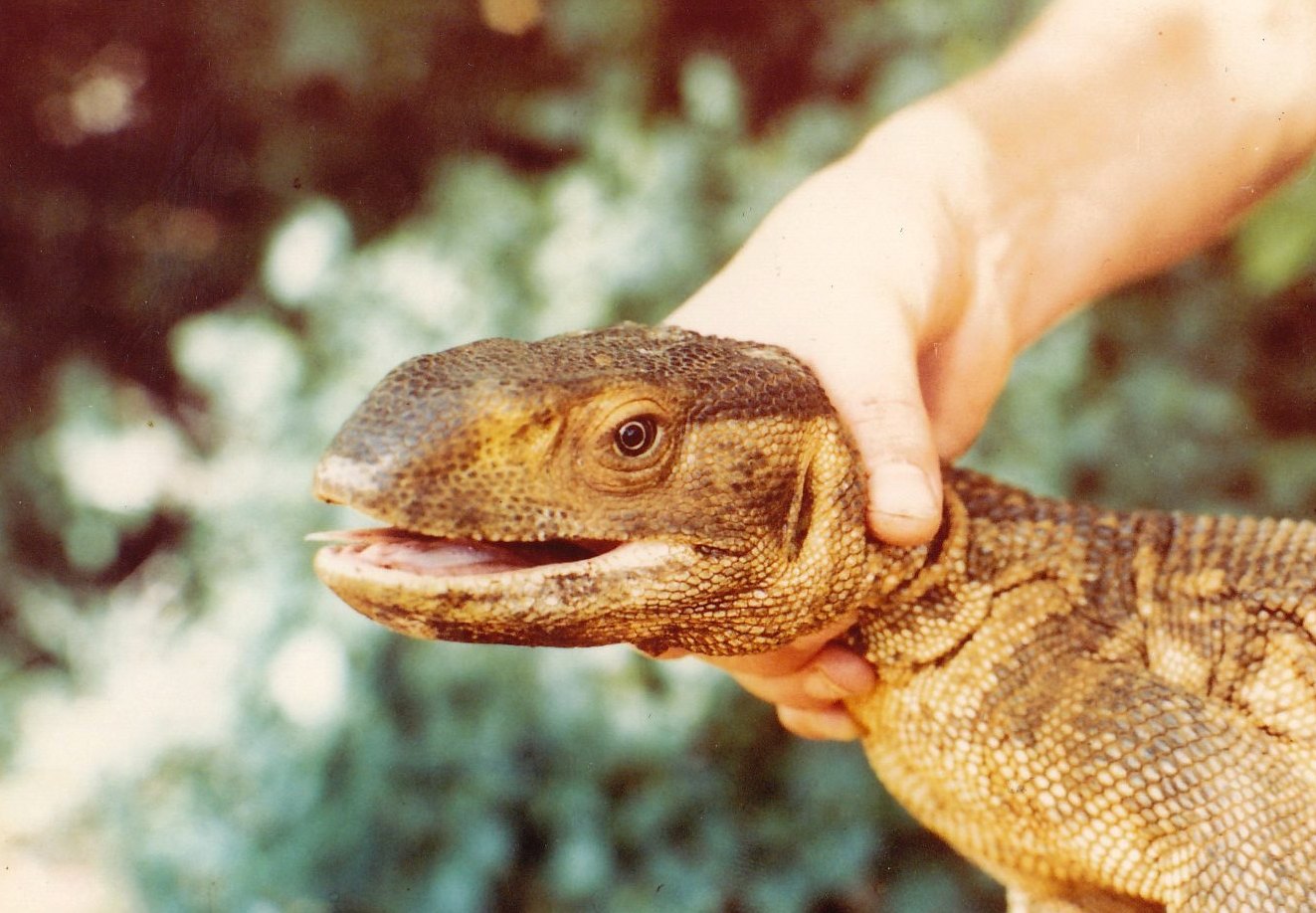
As I grew older, the snakes grew longer

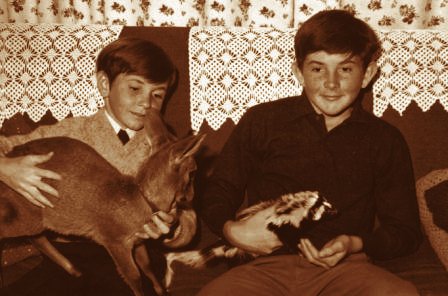
and the animals grew weirder

I’m with the duiker, my brother is with the zorilla

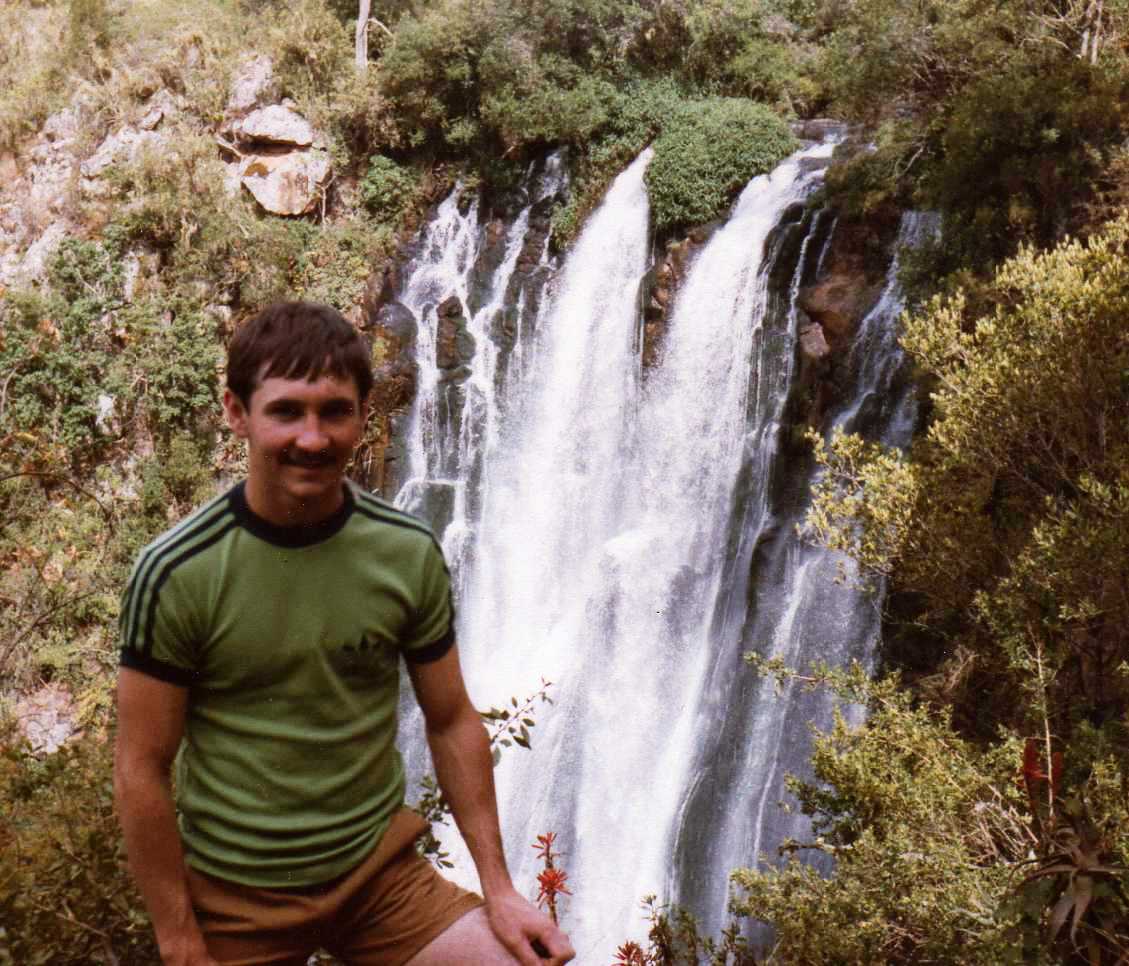
And then older still I started to travel on my own with a definite focus on the style of travel my dad had instilled in me. Here I’m seen at Thompsons Falls in Kenya at the age of 20.

One thing my dad didn’t do was teach me any fashion sense (he was no better than me!). My clothes sense wasn’t good and the moustache hung around for thirteen years, goodness knows why?! I’m seen here riding on a sugar plantation in Kwa-Zulu Natal in South Africa.

Fortunately on occasion a beard disguised the moustache. This is with a gibbon in Thailand. The poor thing was chained to a lamp post and was starved of affection. I shouldn’t have cuddled it but simply had to and it wouldn’t let me go. I wish I could have rescued it.

Of course like most travelling bums I did the usual combination of adventure sports like whitewater rafting and parachuting

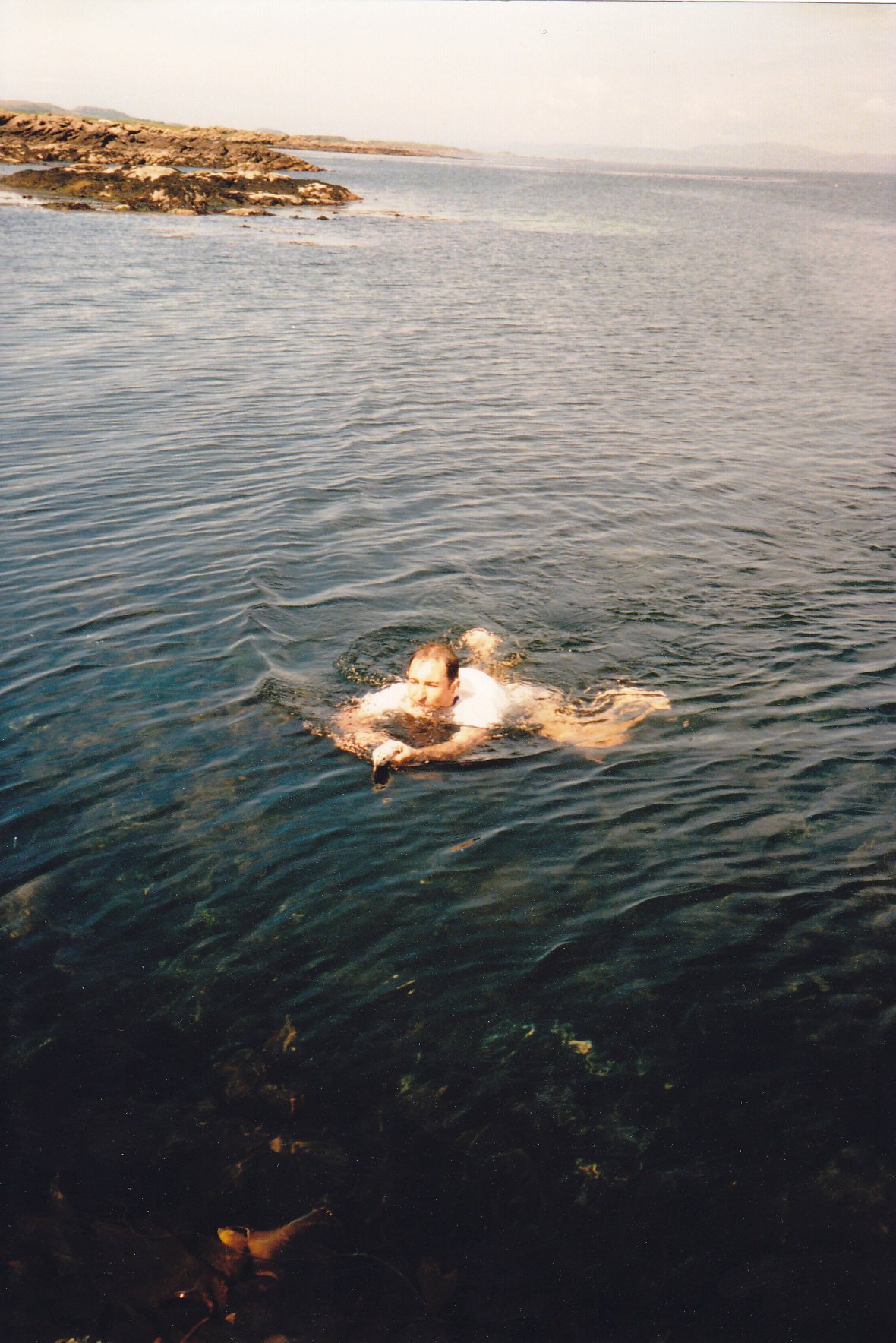
I’ve been stuck with my dad’s sense of animal empathy. Here a seagull chick had become stranded off the coast of Scotland and I decided to rescue it.

I literally froze for my trouble. Scotland isn’t known for its balmy waters.

Nice jocks!

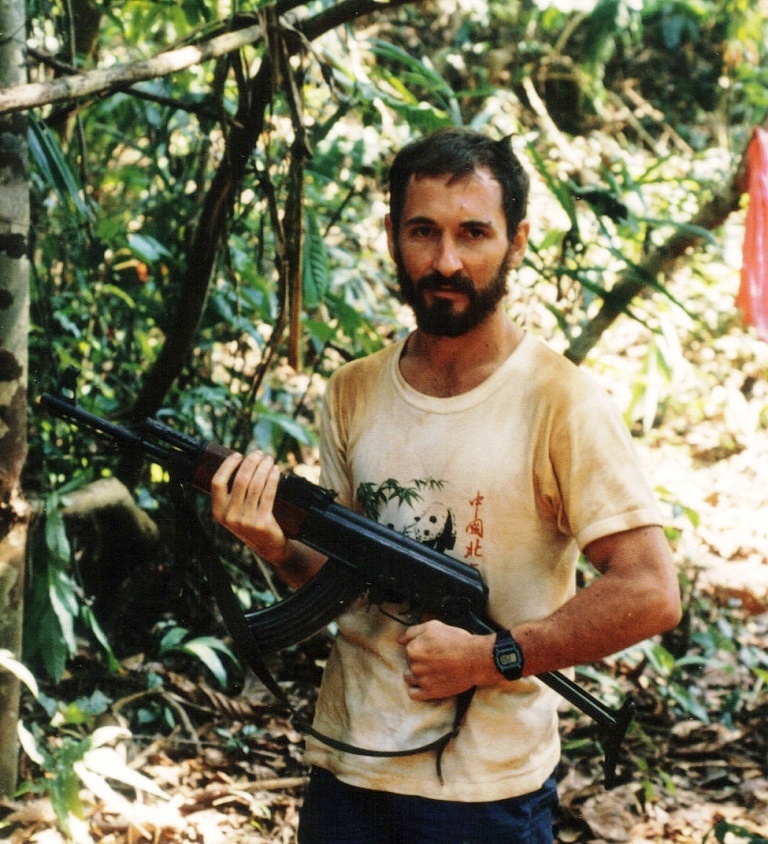
Yes, I managed to do some stupid things along the way. I got myself a tag along with Karen soldiers in the jungles of Burma for five days. This is one of the tribes that’s been trying to get independence from those horrible military rulers of the country and if they could just stop fighting with the other tribes that are on ‘their own side’, they might just do it. I had to familiarise myself with a bit of ‘protection’, not that I wanted to but following the rules was important. I’m sure I’m holding it wrong.

I’ve had some wonderful opportunities in my life, mainly because I’ve sought them out, but some have fallen into my lap. I got the opportunity to dive with minke whales who literally came up to me. These are the ones the Japanese have done their best to eliminate! Shame I only had a crappy throw-away waterproof camera. At one time I had six minkes in my vision, but I’d already run out of film (the old 35mm days)

I was lucky enough to share the last 20 years with a kindred spirit, a wonderful lady who loves the things I love and is seen here with me on top of Mount Kenya in 1994

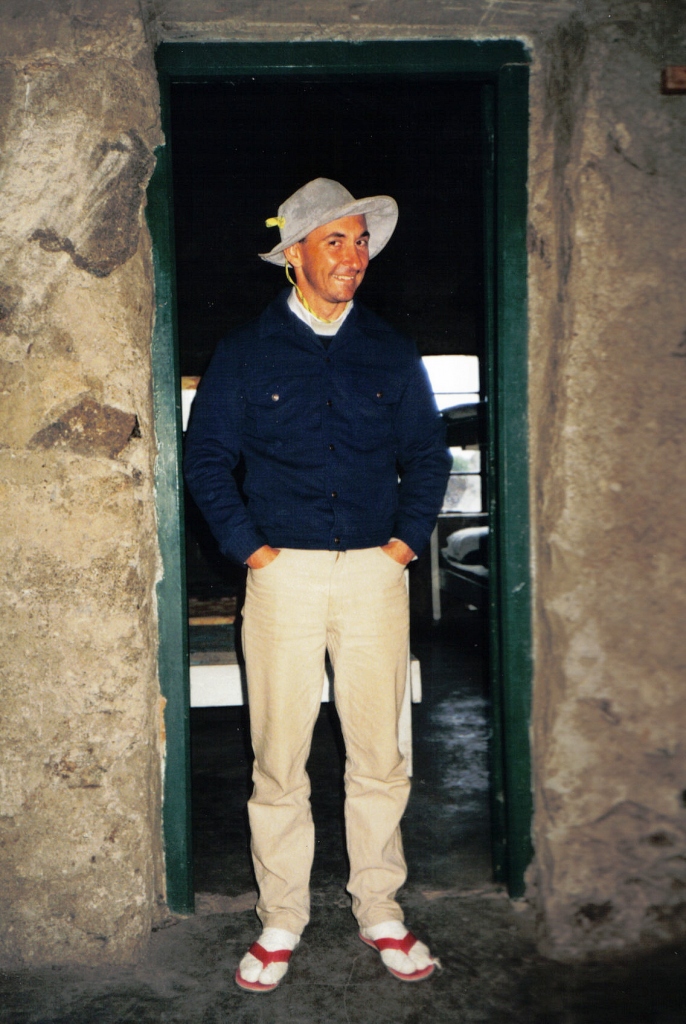
One thing she doesn’t share with me is my fashion sense. In fact I think she would rather move fifty paces to the left at times. This photo though wasn’t really my fault. We had travelled to Kenya on a shoestring with minimal luggage and decided to climb Mount Kenya at the last minute, so I had to buy some ‘warm’ clothes in the only store left available to me. My choices weren’t good and nothing fit but I still think I look quite dashing – Not!

How could you not be inspired in a place like this. A snow-topped mountain right on the African equator with a glacier like this

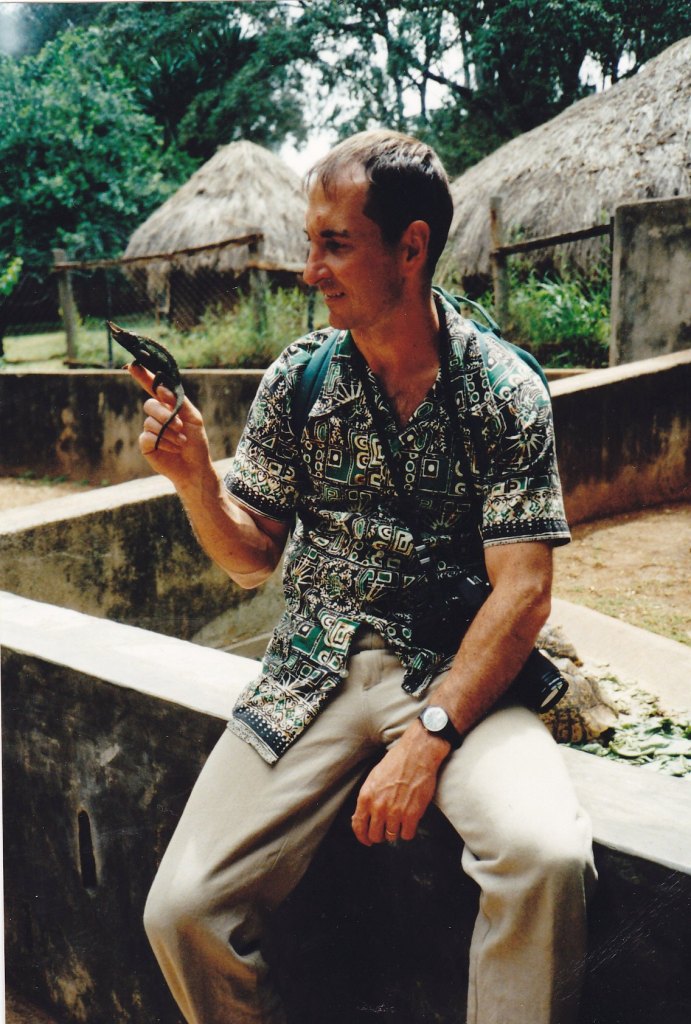
Animals find me or I find them wherever I go. Here I am with a Jacksons Three Horned Chameleon wandering around loose at the Nairobi Snake Park, and another one wandering onto my hand in Tsavo West National Park

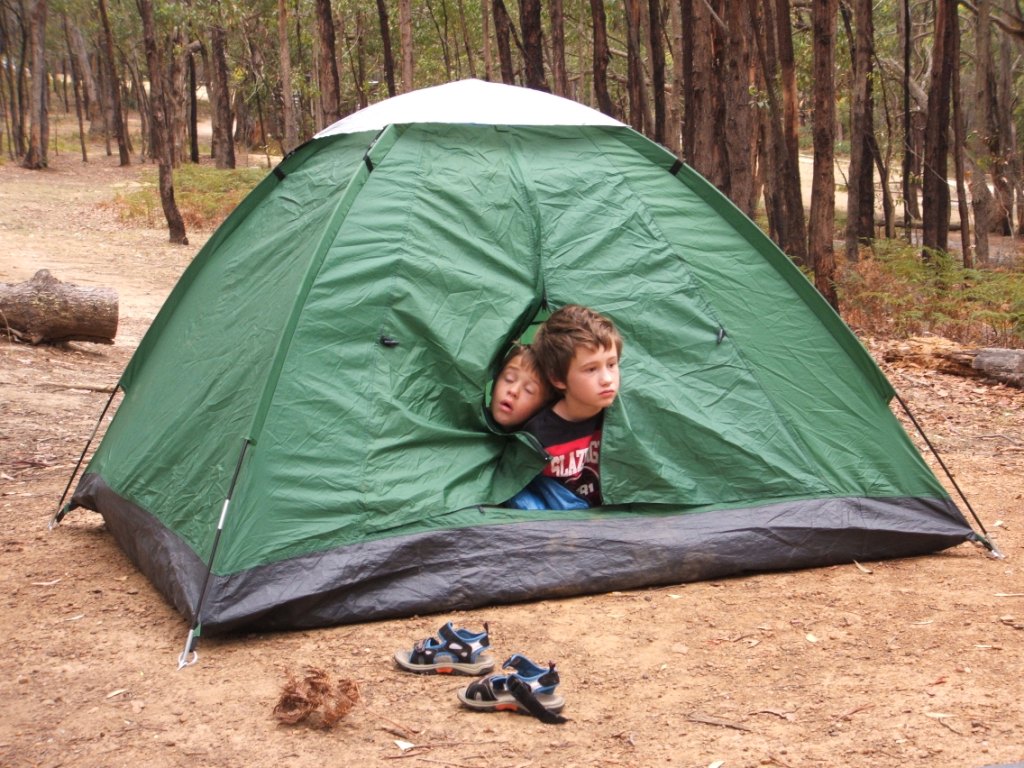
When you’ve been lucky enough to live a life like I have, it becomes a responsibility to raise the next generation to love camping in wild places. I think I’m having varying degrees of success here

I’m pretty certain one of us has spotted something in Hluhluwe National Park but none of us knows where to look

I did win though with my two boys and I’m sure they’ll continue the fight for a better world for wild animals and wild places

And as for my wife, she hasn’t changed, she’s as game as ever.

And me, I continue to be fascinated by wildlife and the wilderness and that will never change;

from playing with chimpanzees

to feeding peanut butter to cheetahs

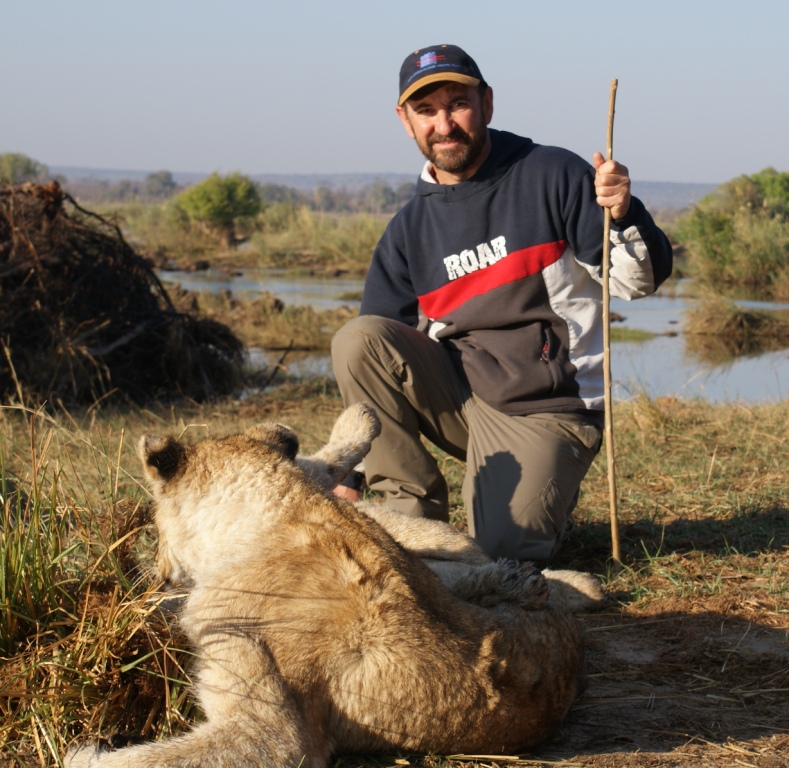
to mucking around with large lions in Zambia


to sitting on top of the largest sand dunes in the world in the Namib Desert

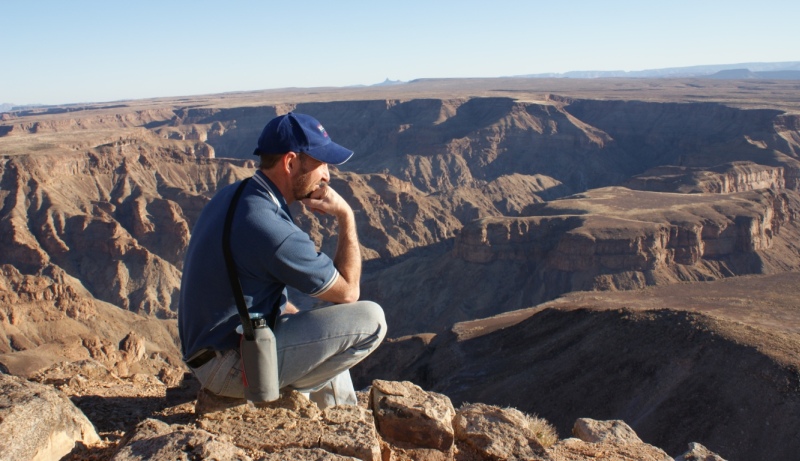
to sitting at the edge of a wilderness miracle called Fish River Canyon in Namibia. Yes, like the better known Grand Canyon but without the people and trinkets that are sold there.

Long may this wonderful journey continue and let’s all buckle down and make certain the natural world is there for our kids to enjoy.

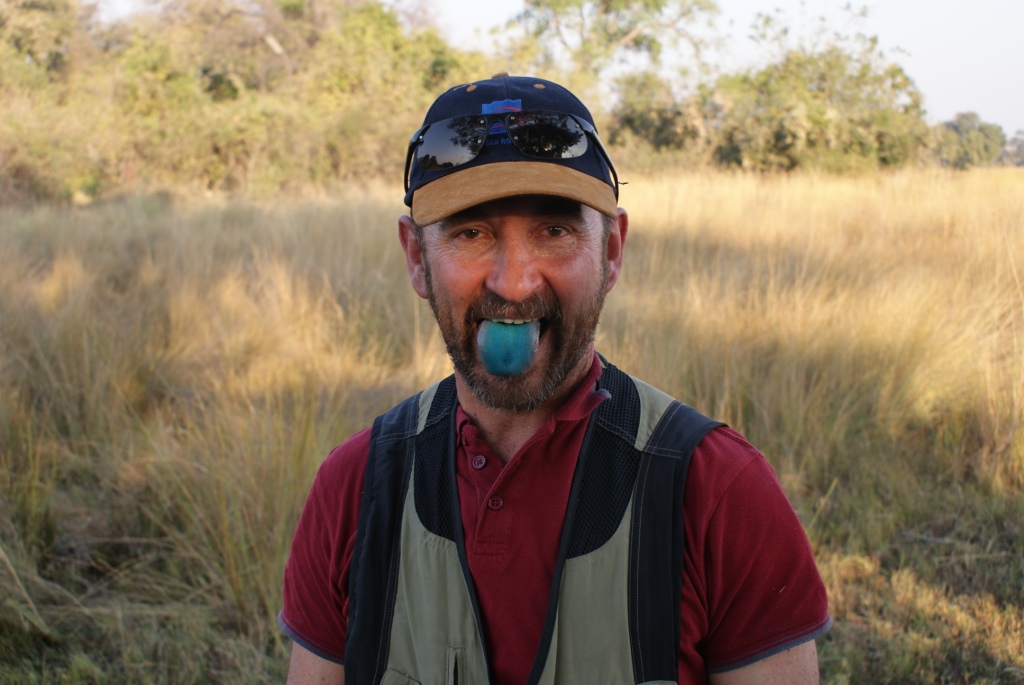
And finally, Australia has its blue tongued lizards but did you know that in the Okavango Delta in Botswana, a similar animal has managed to establish itself. Do not approach!!