Influences

Why am I a wildlife and portrait artist? Who are my influences and why did they influence me?

Now that I’m further down the track, I can count my influences in the hundreds of artists but there were a few who gave me that initial desire and I’ll list them below, with reasons. Being born and raised in Africa I relate very strongly to African artists or artists who’s main subject matter is African (be it people or wildlife). I’ve been around Africa, African animals and exotic travel all my life and this is clearly reflected in my art.

David Shepherd

The first artist to influence me was the great David Shepherd who is still very active at the age of 79. As master artists go, he’s up there at the top of the tree as evidenced by his work. Here’s one example. I’m sure he’s sick of this painting “Wise Old Elephant”. It propelled him into people’s loungerooms all over the world – we have a copy ourselves among many other prints of his.

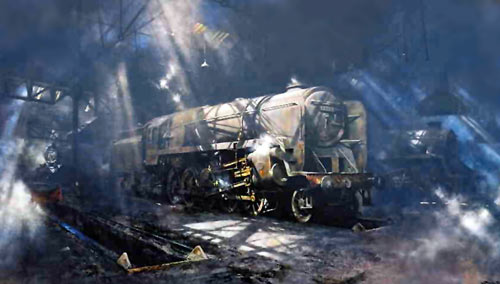
David also painted other images that related strongly with me as a child. My father worked for the East African Railways and Harbours and David seemed particularly taken with Africa’s steam engines, something dear to my dad’s heart too. Here’s David’s painting “On Shed” and anyone who can evoke this kind of atmosphere in a painting is deserving of attention.
David runs the David Shepherd Wildlife Foundation and has literally raised millions in the name of conservation. Check out the website http://www.davidshepherd.org/. We as a family sponsor a baby elephant and also a cape hunting dog through this foundation and if you are in need of a good Christmas present for your kids or a friend, give it some thought.

David has galvanised many celebrities to add their names to his organisation, but unlike many other well meaning foundations, it doesn’t stop there. These celebrities not only ‘add their name’ but they actually work in the organisation, people like that great soccer player Gary Lineker and the great cricketer David Gower are integral cogs in the conservation machine that is David Shepherd.org

One of David’s daughters, Mandy Shepherd, is also a superb artist, and his granddaughter, Emily Lamb, could be among the greatest of them all by the time she’s finished, she’s so talented.

Simon Combes

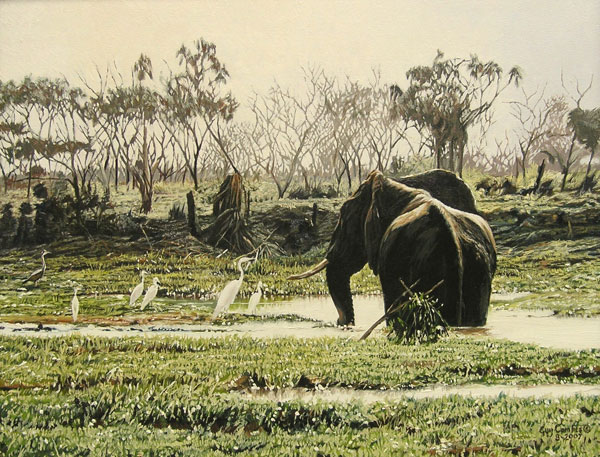
My next influence is a late great artist by the name of Simon Combes. Simon was a fabulous painter and writer. A print of the painting below “Protecting the Flanks” hangs in my studio

Simon could paint!  Check out some of his work http://www.simoncombesartist.com/originals.htm 

He went all over the world painting the most endangered animals and raising awareness of their plight. I have a soft spot for artists who use their art to create a better world for their subjects and few did this as well as Simon. The world is a poorer place without him but also richer for having had him in the first place. He passed his ability on to his prodigiously talented son Guy who is also an artist whom I admire greatly. Here’s an example of his work
Check Guy’s work out here http://www.guycombes.com/

Norman Hedges

Finally I will include my own father here. Whilst he may not have been a great wildlife artist in the rich vein of the previously mentioned luminaries, he was pretty decent at it, but more importantly he instilled in me a love of art, a love of Africa and a love of wildlife. He was a great man, able to turn his hand to anything. He flew planes, wrote a book, painted, played sport well, rose as high as he could in the East African Railways, fought in the war, was a great husband and also a father who, despite how busy he was, always had time for his kids. Here are a few examples of his art


There are many other artists who have influenced me over the years and I will continue this series at a later date.

A progression of art from 1978 to 2010

I don’t think I was always much of an artist. Growing up I was more interested in sports though I’ve always been fascinated with animals. I did however get an ‘A’ in art at O Level (known today as year ten) but then regressed to a ‘C’ at A Level (year 12). However, I guess I never did want to draw or paint what my teachers wanted me to paint. Wildlife wasn’t what they considered ‘art’. Ain’t that always the way!

I’ve also never been a hoarder, having thrown out most of the things that I now wish I would have kept. I was 18 in 1978 and that’s the year I must go back to to find my earliest art that I still have images for. This cheetah stippled in ink doesn’t show much promise, especially since there’s an outline of dots.

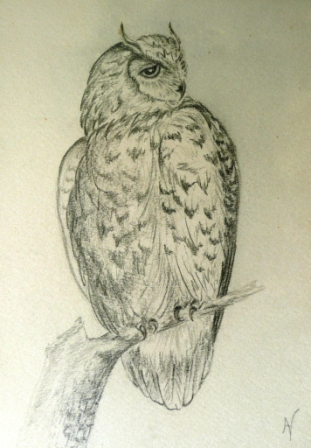
Fortunately I had found something I could do, work in ink, so I tried to develop that style and this owl is the next piece I can find, also from 1978

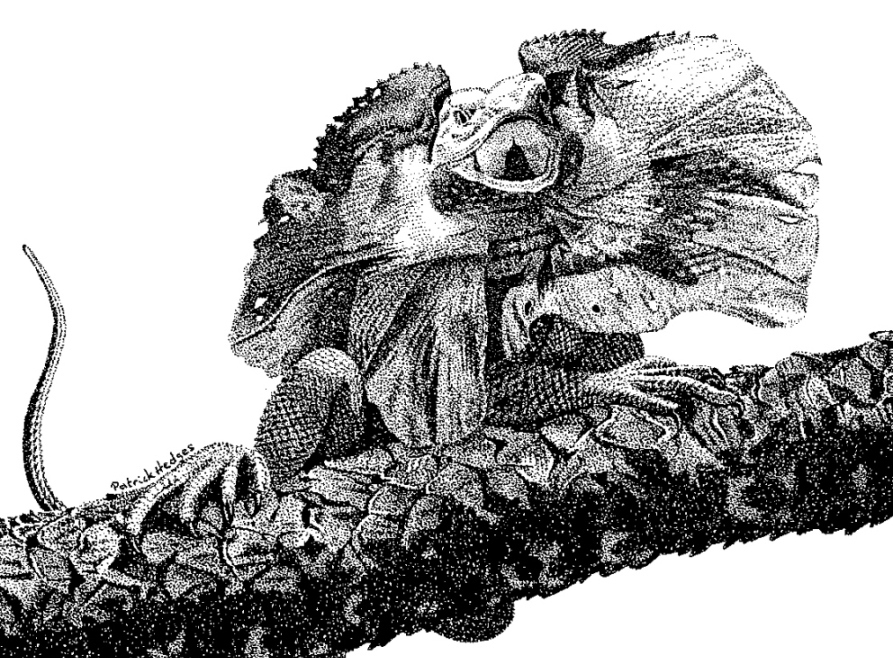
However, if we zoom ahead to 1994 we find that I’ve improved somewhat with this frill-necked lizard

Ok, back to the early 80s. I wanted to try something different and gave coloured pencils a go. I had no idea what surface to use so this peacock and the following kingfisher, both from about 1984, are on normal cartridge paper straight out of a sketch book

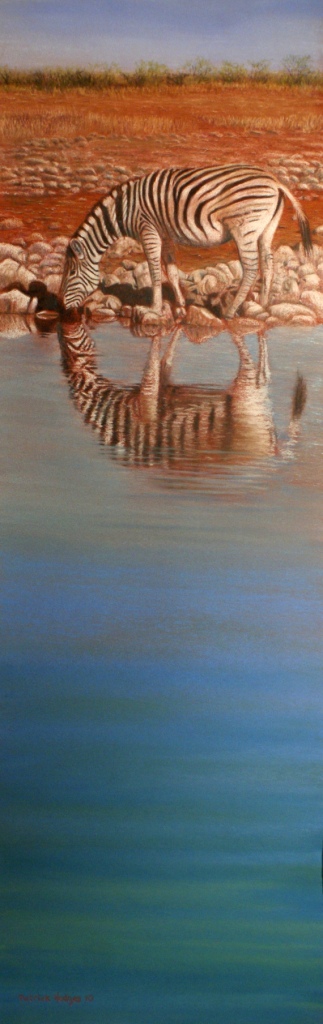
Not much sophistication in these, but I do feel like I’ve improved. Here’s a zebra done this year in coloured pencils

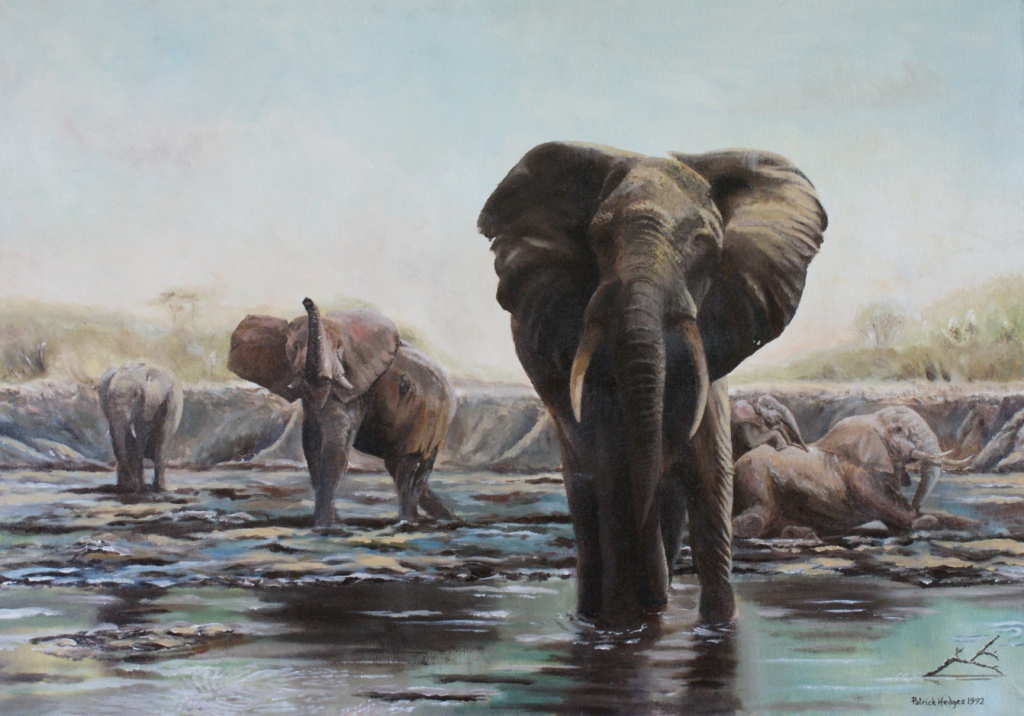
In the 90s I tried to find something that worked for me. I’d emigrated from England to Australia and work was seriously getting in the way of art so I hadn’t done anything for ages, but I bought some acrylics and started coming up with things like this elephant ensemble with foreground and background completely made up and elephants from all sorts of different references including black and white photos.

I also tried watercolours around this time

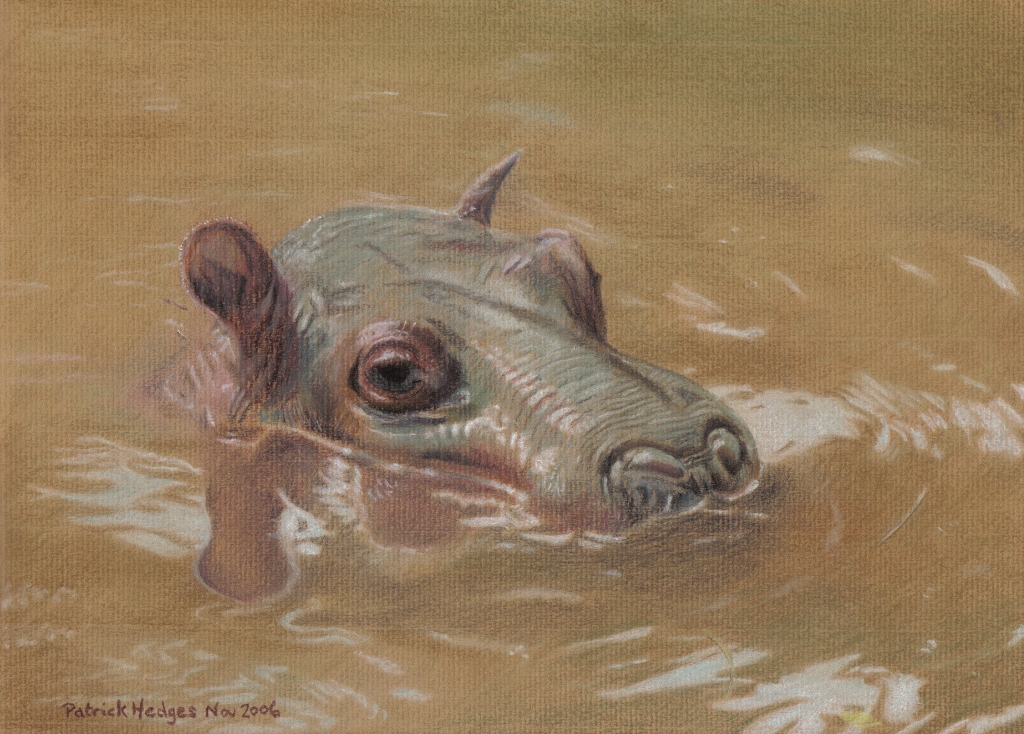
Again because of work, I lost my mojo and didn’t really do any art from many years until I joined the online forum “WetCanvas” in 2005 and started getting influences from artists all over the world. This was a major turning point and someone suggested I try pastels (something I’d never thought of). This hippo was my very first pastel

I related to pastels immediately and when I started using sanded surfaces, I loved them even more

Then one day I saw someone using a thing called scratchboard. I remembered this medium as my dad had done one of a leopard back in the late 60s which you can see below

My dad was one of those annoying people who could do literally anything he set his mind to, and if he set his mind to something, no one could stop him.

I started to try scratchboard and very quickly fell in love with it. It’s now my favourite medium as I love the results but more importantly, I love the process. This is my first scratchboard on a cheap board

Yet again, not very sophisticated at all, but once I started buying the excellent quality that Ampersand provides, I never looked back.

I’ve written this post to show people that where they are today is not necessarily where they will remain. Hopefully my improvement (and I’m a million miles away from where I want to end up) can inspire someone to take their art as far as they can go.

Keep well guys.

Swapping art on the net

I’ve recently organised an event where 31 scratchboard artists each did a piece of art and I drew their names randomly so that they could send their piece to someone, and receive a piece from someone else. It was very successful and can be seen in this thread at Wetcanvas

http://wetcanvas.com/forums/showthread.php?t=617511

My piece went to a friend in New York State and is below.

The entire piece has been scratched with the use of sandpaper and a fibreglass brush, and then coloured with watercolour

New Oil Painting Portrait

Gee this oil painting stuff is hard work! Some people seem to make it look so easy but I guess when you are used to pastels and knives (for scratchboards), brushes act like alien implements. They seem to want to go where they choose, not where I choose, but bit by bit I’m getting there. I refuse to be beaten.

This is a girl from Spitzkoppe in Namibia. She was a school girl and part of a group who entertained us with song and dance. I couldn’t resist painting her. I’m not quite finished yet but not too far to go, unless I decide on extra detail but I don’t think I could do that yet – it’s still only my second ever oil painting.

18″ x 18″. Sorry for the glare. I’ll get a better photo when I finish her.

A scratchboard experiment and first oil

I’ve never used oil paints before, concentrating on scratchboard and pastels mainly, but I’ve always fancied having a go at what is probably the most traditional form of painting, so I got myself a set of artist quality paints and I’d inherited a set of bristle brushes and set to work. I chose Impalas as they fit the colour palette I had and because the female Impala has just about the most exquisitely shaped head of any animal I know. I was struggling with it as brushes seem to me to be alien things in my hands but I bought a couple of extra synthetic ones which seemed much more natural and this is the result – my very first oil painting

Impala (Small)

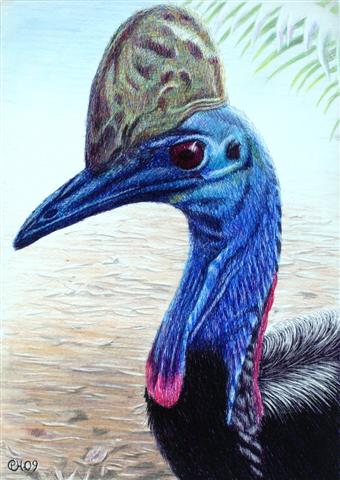
I have quite a few white scratchboards (covered in white ink, not the traditional black) and though I’ve ended up with some reasonable results, I’m always experimenting with different mediums for colouring them. Ampersand’s ‘Claybord’ has a slightly rough ink finish and I thought I’d try using coloured ballpoint pens to see what result I could achieve, not getting my hopes up too much. It’s just a cheap Chinese set from my local newsagent with 16 colours and I’m really quite happy with the result and it opens up some possibilities. This is a Cassowary at our local zoo in Adelaide from one of my many trips there. I’ve used a simple muted coloured pencil background to give it some environment and set the bird off nicely.

Cassowary (Small)